The 2025 Formula 1 season intensifies as the Shanghai International Circuit stages one of its most anticipated showdowns yet—McLaren’s high-speed prowess tested against the relentless challenge of Shanghai’s infamous hairpin. This contest isn’t merely about outright pace but a finely tuned equilibrium between aerodynamic stability and mechanical grip, a balancing act that turns the Chinese Grand Prix into a masterclass of precision racing and engineering savvy. Fresh from a dominant opening sprint weekend in Australia, McLaren arrives with momentum, eager to exploit its advantages while navigating the circuit’s demanding corners and strategic overtaking zones.
Shanghai’s layout is a complex mosaic where power meets precision—a 5.451 km track that blends sweeping fast corners with tight, technical hairpins. McLaren’s MCL42 has consistently excelled on high-speed stretches, demonstrating blistering pace and stability. Yet, the territory around the hairpin at Turn 14, where speeds plummet and heavy braking defines execution, poses an entirely different beast. This corner, the circuit’s prime overtaking hotspot, demands excellent traction on exit and a car setup that sacrifices none of its high-speed agility.
In the throbbing heart of the city’s electric atmosphere, teams like Mercedes and Red Bull Racing also contend fiercely, making tactical and technological chess matches. While McLaren’s focus cuts through these challenges with an aggressive aero package aimed at maintaining speed on the massive 1.2 km straight, it’s the interplay with Pirelli’s tyre compounds, strategic pit stops under DHL’s seamless logistics, and performance data crunched by AWS that ultimately shape race day outcomes.
In this article, we dissect how McLaren’s combination of engineering excellence and driver skill confronts Shanghai’s hairpin and layout intricacies. From the physics of cornering through Turn 14 to strategy adjustments dictated by weather and tyre wear, every factor is instrumental in defining who triumphs in this captivating arena. For enthusiasts keen on the technical ballet, or fans following the thrilling narratives of Formula 1’s rebirth in China, the battle at the Shanghai International Circuit epitomizes high-stakes innovation and adrenaline.
McLaren’s Strength on High-Speed Sections: Aerodynamics and Car Dynamics
McLaren’s recent performances have showcased their car’s remarkable aptitude for handling high-speed corners, positioning them as clear contenders on circuits prioritizing aerodynamic efficiency. The MCL42’s ability to carry momentum through fast sweeps, like Shanghai’s Turn 7, provides a crucial advantage. Here, the aerodynamic design generates significant downforce without inducing excessive drag, allowing drivers to accelerate confidently while maintaining tire adhesion.
Their package is designed to optimize airflow to critical components such as the brakes and suspension, ensuring consistent performance under sustained high speeds. McLaren’s engineers have focused heavily on refining the rear wing and floor structures, balancing their set-up to maximize straight-line velocity on Shanghai’s legendary back straight while still offering enough grip through sweeping bends.
- Key aerodynamic features enhancing high-speed balance:
- Optimized rear wing for minimal drag
- Efficient floor design maximizing downforce
- Advanced brake cooling preserving tire life
- Weight distribution tuned for corner stability
Yet, it’s not just about hardware. The collaborations with Mobil 1 on lubrication and cooling technologies ensure the powertrain runs optimally under high thermal loads. Furthermore, reliance on AWS data analytics during practice sessions allows McLaren to adapt their strategy real-time, identifying the best possible compromise between top speed and cornering grip.
| Attribute | Effect on High-Speed Corners | Impact on Race Performance |
|---|---|---|
| Aerodynamic Downforce | Enhances tire grip through fast turns | Improved lap times and consistency |
| Drag Reduction | Boosts straight-line speed | Better overtaking opportunities |
| Brake Cooling | Prevents tire overheating | Longer stint durability |
McLaren’s ability to thrive on Shanghai’s high-speed sections, leveraging its aerodynamic efficiency and finely honed car dynamics, stands as a key pillar of their competitive edge. Nevertheless, the circuit’s technical demands require adaptability for corners demanding heavy braking and acceleration instead of just speed.
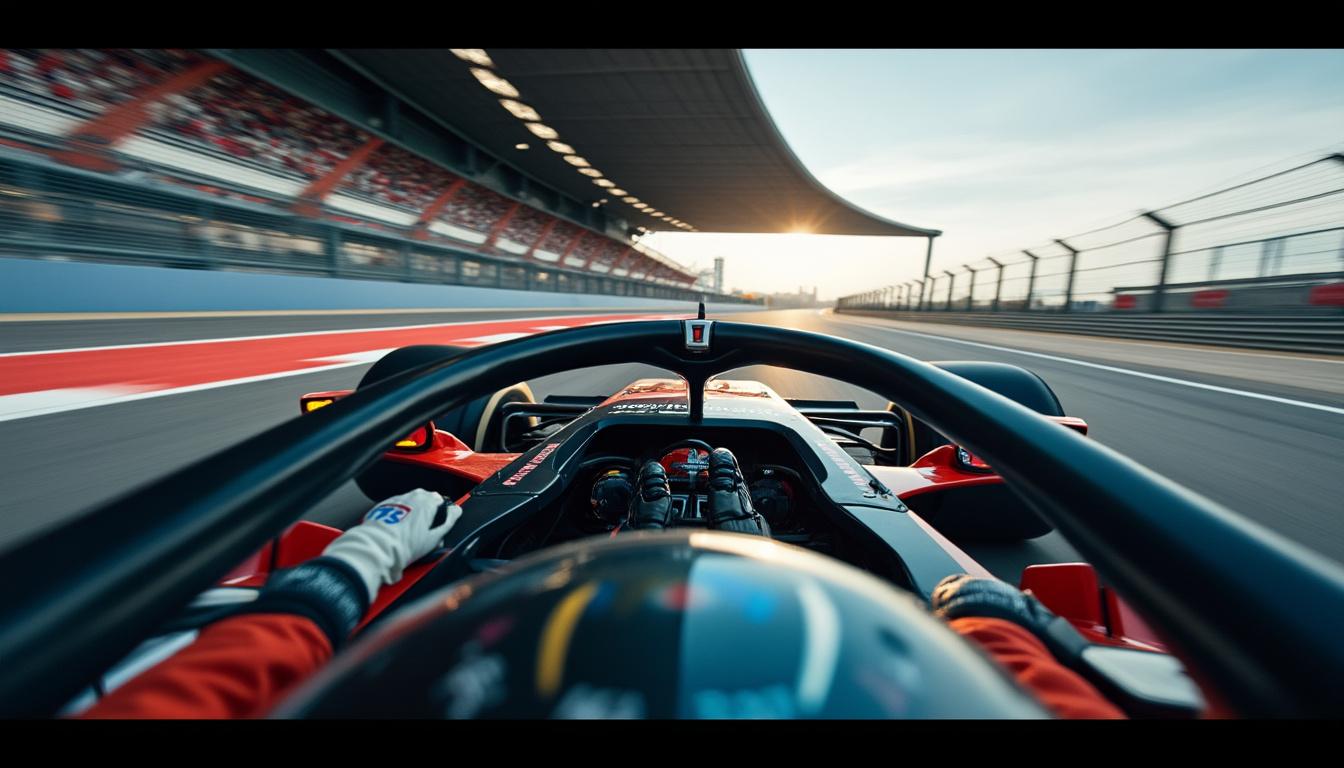
The Unique Challenge of Shanghai’s Hairpin: Traction and Tactics at Turn 14
The hairpin at Turn 14 is one of the most defined and decisive corners in all of Formula 1, characterized by heavy braking from top speeds exceeding 340 km/h down to roughly 60 km/h. This abrupt deceleration and the tight 180-degree turn place immense strain on car balance, traction control, and driver skill.
For McLaren, while their high-speed balance is exemplary, mastering the hairpin requires a different approach:
- Mechanical grip optimization: Ensuring tires maintain contact and traction while exiting the hairpin is crucial to accelerate effectively onto the back straight.
- Brake management: Effective modulation prevents locking up wheels during the braking zone, maintaining control for overtaking opportunities.
- Set-up compromises: Adjusting suspension settings and brake bias allows better handling under heavy deceleration without degrading performance on faster sections.
This corner also presents a goldmine for overtaking, typically exploited using DRS, combined with the slipstream down the sprawling 1.2 km straight that follows. The balance between entering the hairpin slowly enough to stay within control but fast enough to keep pace defines much of the race’s tactical rhythm.
Thanks to Pirelli’s latest tyre compounds in 2025, teams face an intricate puzzle: The need to preserve tire integrity on heavy braking zones like Turn 14 while managing degradation across Shanghai’s abrasive surface. McLaren’s pit crew, supported by DHL’s logistics excellence, must perfectly time pit stops to avoid losing track position without sacrificing performance, enhancing the strategic battle that unfolds every Chinese Grand Prix weekend.
| Technical Aspect | Requirement at Hairpin | Race Impact |
|---|---|---|
| Braking Efficiency | Stable and responsive brake control | Minimized time loss in deceleration |
| Traction on Exit | Maximize grip for acceleration | Improved overtaking and lap consistency |
| Tyre Preservation | Minimize wear during heavy braking | Strategic flexibility for pit stops |
McLaren’s drivers, backed by data from Lenovo’s telemetry systems, continuously tune their driving lines and car settings to perfect hairpin performance, a necessity against aggressive rivals like Mercedes and the ever-dominant Red Bull Racing squad.
Strategic Insights: How Race Strategy and Tyre Management Shape the Outcome at Shanghai
Shanghai’s unpredictable weather combined with a high-degradation track surface transforms race strategy into a decisive factor. Teams must juggle tyre compound choices, pit stop timing, and adaptive race plans supported by live AWS analytics to secure victory.
Pirelli’s 2025 P Zero tyres are tailored to withstand the abrasive track yet remain sensitive to temperature and wear patterns. For McLaren, this means:
- Choosing tyre compounds that balance durability with grip—soft compounds deliver pace but may require additional stops, whereas medium or hard compounds improve stint longevity.
- Maximizing stint lengths to minimize pit stops, which can cost crucial seconds due to Shanghai’s complex pit lane configuration.
- Reacting swiftly to weather changes, leveraging data intelligence for timely decisions on intermediate or wet tyres.
The team’s collaboration with DHL ensures flawless logistical support to avoid delays, while AWS-real-time data feeds provide instant feedback on tyre wear rates, lap times, and competitor strategies. This holistic approach means McLaren can innovate mid-race, switching tactics if competitors falter or gain advantages.
| Strategy Component | Importance at Shanghai | Effect on Race |
|---|---|---|
| Tyre Compound Selection | Balances pace vs. durability | Controls stint length and pit frequency |
| Pit Stop Timing | Minimizes track position loss | Enables strategic undercuts or overcuts |
| Weather Adaptation | Dynamic response to rain and track temperature | Risk mitigation and opportunity capitalization |
In 2025, McLaren’s fine-tuned race strategy at Shanghai leverages all these factors for optimum results, enhancing their chance to convert qualifying pace into race wins, battling aggressive teams like Mercedes and Red Bull Racing who also bring intense strategic depth.
Comparative Team Performance at Shanghai: McLaren, Mercedes, and Red Bull Racing Face Off
The 2025 Chinese Grand Prix serves as an arena where three F1 giants—McLaren, Mercedes, and Red Bull Racing—showcase distinct but competitive strengths that color the championship race.
McLaren: Known for precision in high-speed corners coupled with solid straight-line efficiency, the team combines cutting-edge technical updates with seamless communications provided by Lenovo and Mobil 1 partnerships. Their alignment of driver skill and car consistency presents a formidable challenge in Shanghai.
Mercedes: Historically dominant here with six wins, Mercedes focuses on powerful acceleration out of tight corners like the Turn 14 hairpin. Their technical crew continuously refine brake modulation and traction systems to exploit Shanghai’s unique demands.
Red Bull Racing: Triumphant at Shanghai’s 2024 GP, Red Bull leverages aggressive aero setups with engine power to maximize speed on straights. Their racecraft and overtaking abilities position them as fierce rivals, especially in battles requiring split-second decisions.
| Team | Strength at Shanghai | Weakness | 2024-2025 Key Results |
|---|---|---|---|
| McLaren | High-speed cornering, aerodynamic balance | Low-speed corner traction | 2024 Australia winner, strong Shanghai qualifier |
| Mercedes | Brake control, acceleration out of tight corners | Top speed limitation on straights | Multiple Shanghai wins, consistent podiums |
| Red Bull Racing | Straight-line speed, aggressive overtaking | Tyre wear management | 2024 Chinese GP winner, leading championship |
The contest at Shanghai unfolds as a strategic tug of war, with McLaren aiming to leverage their strengths, counter weaknesses, and challenge Red Bull Racing and Mercedes for supremacy. The intricate balance of power and precision required here epitomizes Formula 1’s evolving technology and strategy.
Technical Advancements and Innovation Driving Performance at the Shanghai International Circuit
Shanghai’s testing ground accelerates innovation as teams push the limits of technology for gains measured in mere fractions of a second. For McLaren, the challenge is to integrate advancements that enhance both aerodynamics and mechanical components to meet the diverse demands of the track’s contrasting sections.
Recent innovations revolve around:
- Active aerodynamic systems: Adjusting wing angles dynamically for higher efficiency on straights and increased downforce in corners.
- Brake-by-wire technologies: Improving brake precision and modulation particularly in heavy braking zones like Turn 6 and the hairpin at Turn 14.
- Energy recovery and hybrid power units: Maximizing power deployment on acceleration out of tight corners, supported by Mobil 1 lubricants and thermal control.
- Advanced data analytics partnerships with AWS and Lenovo: Real-time telemetry and AI-assisted decision making optimize race strategy and car setups.
| Technology | Function | Benefit at Shanghai |
|---|---|---|
| Active Aero | Dynamic wing angle adjustment | Better speed and cornering adaptability |
| Brake-By-Wire | Precision braking control | Reducing locking and tire wear |
| Hybrid PU Enhancements | Efficient energy use on acceleration | Improved exit speed from hairpin |
| Real-Time Data Analytics | Strategic decision support | Adaptive race strategies |
Such advancements are not just incremental but pivotal; they shape the margins between victory and defeat on a circuit that demands versatility and precision in equal measure. This tech race, fueled by collaboration with partners like Lenovo, Mobil 1, AWS, and DHL, highlights why the Shanghai International Circuit remains a paragon of modern Formula 1 challenges.
For readers eager to delve deeper into the championship dynamics, read more here about the thrilling 2025 China GP preview.
Why is the Turn 14 hairpin so crucial at Shanghai?
Turn 14 is a major overtaking point demanding heavy braking and excellent exit traction, directly impacting race position and speed down the 1.2 km straight.
How does McLaren’s car setup balance high-speed and low-speed corners?
McLaren optimizes aerodynamics for high-speed stability and adjusts suspension and brake settings to maintain control and traction in slower, technical sections like the hairpin.
What role does tire management play at the Shanghai Grand Prix?
Due to the abrasive track surface and heavy braking zones, careful tire compound selection and pit stop timing are essential for maintaining pace and avoiding excessive wear.
Which teams are McLaren’s biggest rivals in Shanghai?
Mercedes and Red Bull Racing are McLaren’s main competitors, each bringing specific strengths: Mercedes with braking and acceleration, and Red Bull with outright speed and aggressive overtaking.
How do technology partnerships influence race performance?
Collaborations with companies like AWS, Lenovo, Mobil 1, and DHL provide McLaren with advanced telemetry, lubricants, strategic analytics, and seamless logistics essential for competitive racing at Shanghai.