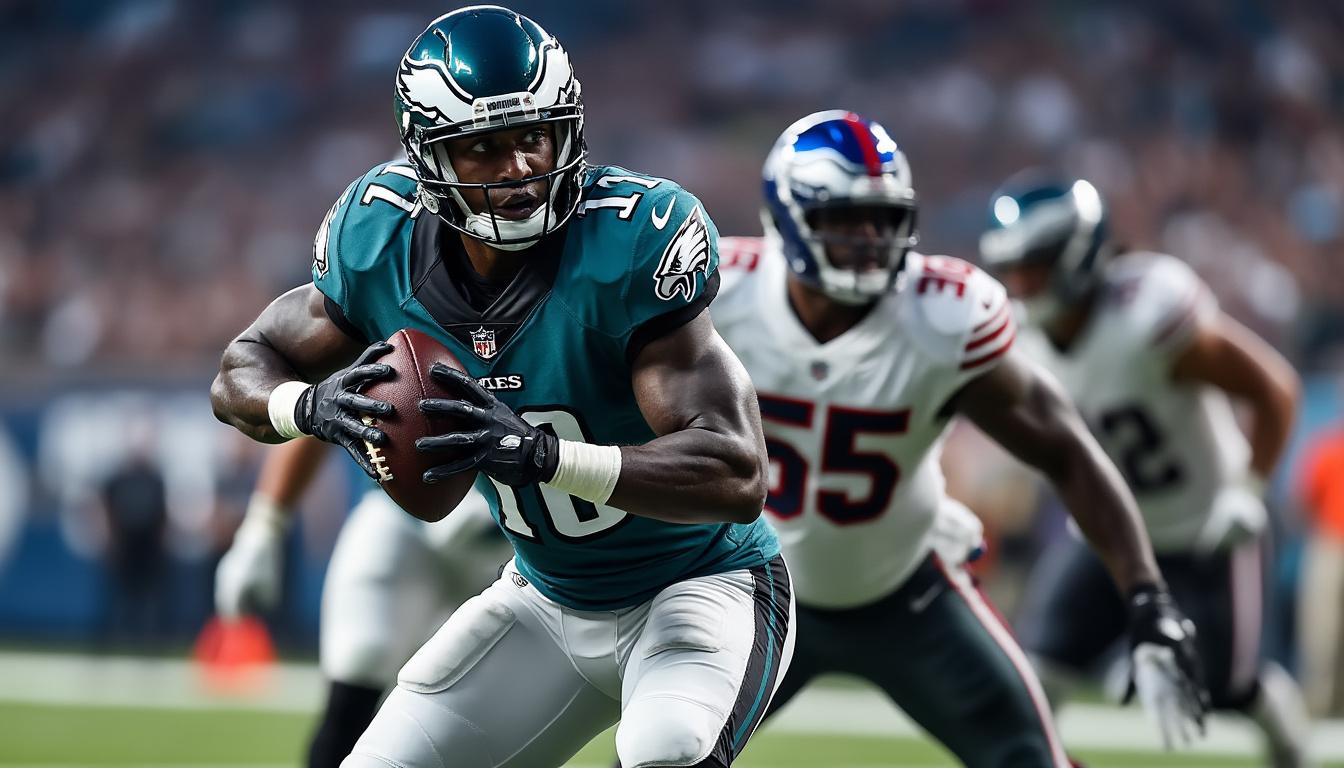
The clash between the Philadelphia Eagles and the New York Giants in Week 8 of the 2025 NFL season was a masterclass in the tactical battle of route combinations against innovative defensive pressures, notably the infamous Wink Martindale-style blitzes. Both teams showcased strategic depth and physical mastery, but it was the Eagles’ offensive adaptability and explosive plays that defined the narrative. With Jalen Hurts commanding the offense and a rejuvenated Eagles defense standing strong, this game revealed the intense chess match behind every snap, unpacking the nuanced and aggressive “Wink style” defensive pressures that have become a signature threat in modern football. Fans witnessed how route combos, play calling, and individual brilliance blend to overcome relentless pressure schemes, turning what could have been chaos into controlled execution and scoring frenzy.
In this fierce showdown at MetLife Stadium, the Eagles’ offensive line, skill players, and strategic prowess were tested to the limit against the Giants’ complex pressure packages. Understanding how these route combos counteract Wink Martindale’s unpredictable blitzes allows fans to appreciate the blend of strategy, athleticism, and split-second decision-making integral to American football. This article delves deep into the interaction of Eagles route combos versus Wink style pressures, capturing the emotion, technical brilliance, and sheer excitement of game day, supported by detailed player performances and key tactical insights.
Decoding Eagles Route Combinations Against Wink Martindale’s Pressures
The Eagles’ offensive success against the Giants rested heavily on their ability to utilize dynamic route combinations that stretched the defense, created open lanes, and manipulated timing to nullify Wink Martindale’s multi-layered pressures. Martindale’s blitzes rely on presenting deceptive looks, often involving “Double Mug” nickel blitz packages that threaten seven-man pressures from various angles, keeping quarterbacks under a constant threat of sacks and hurried throws.
Philadelphia’s offensive approach was built around quick, high-percentage routes, coupled with deeper vertical threats to keep the Giants’ defenders honest. Jalen Hurts, who played 55 snaps, completed 15 of 20 passes for 179 yards and four touchdowns with zero interceptions, demonstrating precision and calm under pressure. The route combos focused on:
- Crossing routes: These forced defenders to navigate traffic and communication challenges amid blitzen chaos.
- Quick outs and slants: Designed for rapid release, these kept Hurts out of trouble and sustained offensive drives.
- Vertical seams and posts: Targeted at exploiting rookie Giants safety splits and creating explosive scoring opportunities.
- High-low concepts: Created if-not-then read options for Hurts to avoid heavily pressured rushers.
These routes worked in tandem to stretch the field horizontally and vertically, forcing the Giants’ defense to make difficult decisions about coverage and pressure assignment. For example, DeVonta Smith was targeted nine times, finishing with six receptions for 84 yards despite a hemmed-in environment caused by constant pressure from Josh Uche, Jalyx Hunt, and Patrick Johnson on the edge.
Beyond route design, the Eagles employed a varied snap count (59 offensive snaps total), tactical pre-snap motions, and quick timing routes to throw off the Giants’ rhythm and disguises. This interplay between route execution and pressure recognition is a textbook demonstration of how elite NFL offenses adapt to complex blitz packages.
| Route Type | Purpose | Example Player Impact |
|---|---|---|
| Crossing Routes | Confuse defenders, create pick plays | DeVonta Smith’s 6 catches for 84 yards |
| Quick Outs & Slants | Quick releases under pressure | Jalen Hurts’ 15 completions on 20 attempts |
| Vertical Seams & Posts | Exploit deep coverage gaps | Dallas Goedert’s 2 TD catches |
| High-Low Concepts | Give QB safe read options | Saquon Barkley’s timely runs opening plays |
Unraveling Wink Martindale’s Defensive Pressure Schemes
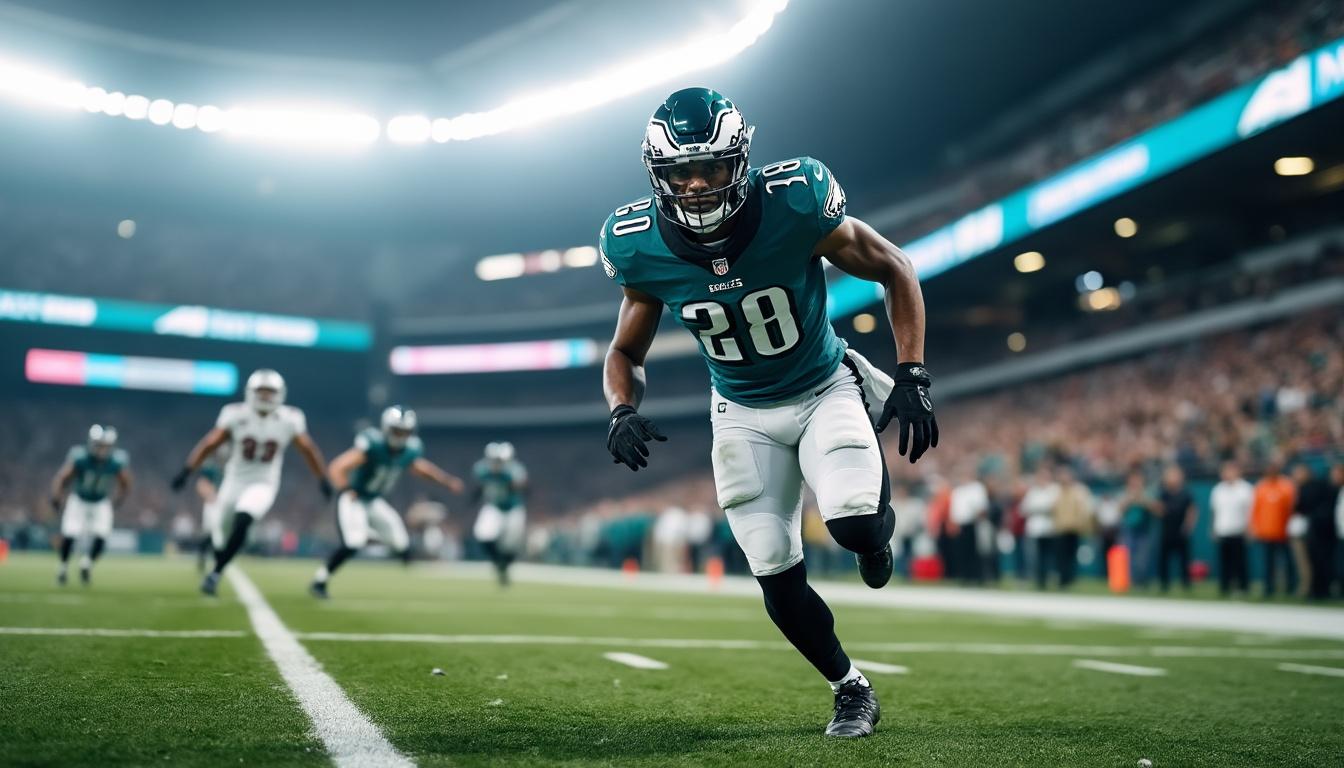
Wink Martindale’s defense is a modern marvel of pressure application, blending unpredictability, speed, and surface disguises. Known for his “Double Mug” blitz, Martindale challenges offenses by flooding gaps with linebackers and defensive backs, often deploying seven-man pressure packages without sacrificing coverage stability.
The Giants’ defensive game plan sought to disrupt Hurts’ rhythm by introducing a variety of pressures:
- Edge rushes: Led by Jalyx Hunt and Josh Uche, these rushers aimed to collapse the pocket and force hurried throws or sacks.
- Interior stunts and slants: From Jordan Davis, Jalen Carter, and Moro Ojomo, who combined for multiple sacks, to confuse blocking schemes.
- Nickel and dime looks: Presenting additional defensive backs close to the line pre-snap, complicating blocking assignments and route adjustments.
- Zone blitz concepts: Blitz rushers dropping into short coverage, luring Hurts into traps.
One standout performance was Jalyx Hunt’s relentless presence, who recorded a career-high 9 pressures and a key sack despite a Giants’ defense in transition. His disruption was critical in the Giants limiting the Eagles’ run game and forcing contested throws. Equally, the Giants’ use of seven-man pressures placed extreme strain on the Eagles’ offensive line, including key moments where Brett Toth had to seal defenders or open lanes, showcasing the physical battle across the trench.
This pressure style ranks among the NFL’s most dangerous because it blends:
- Confusion with pre-snap looks
- Speed and power rush combinations
- Layered coverage disguises resisting quick passing attacks
- Pressure applied on all down types, including early downs
| Pressure Type | Role | Impact Player |
|---|---|---|
| Double Mug Blitz | Masked pressure origins, confuse blocking | Jalyx Hunt (9 pressures) |
| Edge Rushing | Create sack opportunities | Josh Uche (near sack, strong presence) |
| Interior Stunts | Break blocking lines | Jalen Carter, Jordan Davis, Moro Ojomo (multiple sacks) |
| Zone Blitz | Lure QB into disasters | Moro Ojomo (4 sacks season leader) |
Player Performances: Key Contributors in Eagles vs Giants Battle
The Week 8 contest was a platform for standout performances on both sides, yet the Eagles emerged with impressive individual contributions amidst a rigorous contest. Jalen Hurts’ command on offense was nearly flawless, with 4 touchdown passes and zero interceptions, reinforcing his growing stature as a fearless leader who thrives under pressure.
The running backs—most notably Saquon Barkley—shattered earlier season-long limitations with a 65-yard touchdown dash that electrified Eagles fans and changed the game’s momentum. Barkley finished with 150 rushing yards on 14 carries, a stunning average of 10.7 yards per carry, illustrating burst and elite vision. Tank Bigsby also made his mark with 104 yards on 9 carries, heralding depth and versatility in the Eagles’ backfield.
Wide receivers played critical roles as well. DeVonta Smith was the reliable target despite A.J. Brown’s absence due to a hamstring injury, securing 6 receptions and multiple yards after the catch. Dallas Goedert doubled his career-best touchdown tally with two touchdown grabs, quietly asserting his vital role in the red zone for the Eagles.
On defense, the edge rushers like Jalyx Hunt and interior line players such as Jalen Carter and Jordan Davis were relentless, recording multiple sacks and maintaining pressure that forced difficult throws. The balance of offensive bursts with defensive pressure embodied the physical and emotional rollercoaster that defines NFL Sunday.
| Player | Position | Key Stats | Impact |
|---|---|---|---|
| Jalen Hurts | Quarterback | 15/20 completions, 179 yards, 4 TD, 0 INT | Controlled offense, efficient under pressure |
| Saquon Barkley | Running Back | 14 carries, 150 yards, 1 TD (65-yard run) | Game-changer, explosive run game |
| Dallas Goedert | Tight End | 3 receptions, 28 yards, 2 TD | Key red zone presence |
| Jalyx Hunt | Edge Defender | 9 pressures, 1 sack | Disruption in backfield |
Strategic Impact of Gear and Technology in Player Performance
While the battlefield of MetLife Stadium was dominated by tactical prowess and raw athletic talent, an often-overlooked factor is the advanced equipment and technology that optimize player performance. Leading brands like Adidas, Nike, and Under Armour provide customized gear tailored for speed, protection, and durability. For example, the Eagles’ players often sport the latest Wilson footballs, engineered for optimal grip and flight under challenging weather conditions, crucial in tight games where every pass counts.
Helmet technology by Riddell enhances player safety, incorporating cutting-edge impact absorption systems, critical in a high-pressure game filled with blitzes and tackles. Uniform and footwear innovations from Fanatics and Oakley eyewear contribute to player comfort and visibility, helping receivers track the ball amid sun glare or stadium lights.
Hydration and recovery, essential to sustaining this level of intensity, leverages sports science backed by Gatorade products, ensuring players maintain peak performance from pre-game warmups to post-game recovery. Meanwhile, video analysis and simulation technologies from companies like EA Sports have revolutionized game preparation, allowing fans and coaches alike to dissect plays such as the ominous Wink blitz from every angle, enhancing understanding of the sport’s complexity.
| Brand | Product/Technology | Impact on Game |
|---|---|---|
| Adidas & Nike | Performance apparel and cleats | Enhanced mobility and comfort |
| Wilson | Official NFL footballs | Consistency in grip and throws |
| Riddell | Advanced helmets | Player safety, impact protection |
| Fanatics & Oakley | Eyewear and fan gear | Improved visibility and fan engagement |
| Gatorade | Hydration products | Sustain peak athlete performance |
| EA Sports | Game analytics and simulations | Preparation & fan experience |
In-Depth Analysis and Takeaways From the Eagles-Giants Week 8 Game
This Week 8 contest offers multiple layers of insights for fans and analysts eager to understand the ongoing NFL narrative. Firstly, the Eagles’ offensive line, widely criticized after their earlier season loss in New Jersey, showed signs of resilience and pride by consistently moving Giants defenders off the line during running plays. Brett Toth emerged as a surprise standout, displaying exemplary reach blocks and creating pathways for the explosive running backs.
Secondly, the depth and health of the Eagles’ edge defenders are a fundamental concern. With only three healthy players at the position entering the game, the emergence of Jalyx Hunt as a pressure specialist is a significant positive. The anticipated return of Nolan Smith and Brandon Graham, coupled with possible trade deadline acquisitions, could solidify this vital defensive segment.
Thirdly, the continued maturation of the tight end position, highlighted by Dallas Goedert’s seventh touchdown reception of the season—surpassing his career-high—demonstrates the Eagles’ versatile offensive threats. Meanwhile, wide receivers like Jahan Dotson provide complementary speed and playmaking ability, as evidenced by his critical “moss” play on a Giants cornerback.
Finally, the Giants’ defense presented a blueprint of how to deploy pressure while maintaining coverage balance, but the Eagles’ capacity to adjust, execute, and exploit gaps was the decisive factor in the 38-20 victory. This tactical duel underscores the importance of preparation, execution, and mental toughness in the NFL’s high-stakes environment.
| Key Insight | Effect on Game | Implication for Season |
|---|---|---|
| Improved Offensive Line Play | Better run game and protection | Essential for playoff push |
| Emerging Edge Players | Increased defensive pressure | Depth reduces reliance on trades |
| Versatile Offensive Weapons | Unpredictable scoring threats | Balanced attack stresses defenses |
| Adaptive Game Planning | Neutralized complex blitzes | Blueprint for future games |
For fans eager to dive deeper into the Eagles’ season progress and strategic evolution, click here to read more and enrich your appreciation of this electric team’s journey in 2025.
What makes Wink Martindale’s blitzes so challenging for quarterbacks?
Wink Martindale’s blitzes are challenging due to their unpredictability, use of disguised pressure origins like the ‘Double Mug’ blitz, and the combination of speed and coverage complexity. This forces quarterbacks to quickly read the defense and decide under intense pressure.
How did Jalen Hurts perform under pressure in Week 8?
Jalen Hurts performed outstandingly, completing 75% of his passes for 179 yards and four touchdowns with no interceptions, showing composure and precision despite facing intense pressures from the Giants’ defense.
What defensive players were key in disrupting the Eagles’ offense?
Jalyx Hunt led the Giants with nine pressures and a sack, while interior linemen Jordan Davis, Jalen Carter, and Moro Ojomo combined for multiple sacks, effectively disrupting the Eagles’ offensive rhythm.
How do route combinations help counter aggressive blitzing strategies?
Route combinations such as crossing routes, quick outs, and high-low concepts create multiple read options for the quarterback, stretch the defense, and often force defenders out of optimal positions, thereby mitigating the effectiveness of blitzes.
What role does modern equipment play in NFL games?
Modern equipment from brands like Adidas, Nike, Riddell, and Wilson enhances player safety, comfort, and performance by using advanced materials and technology. Hydration products from Gatorade and analytics from EA Sports further support player endurance and strategic preparation.