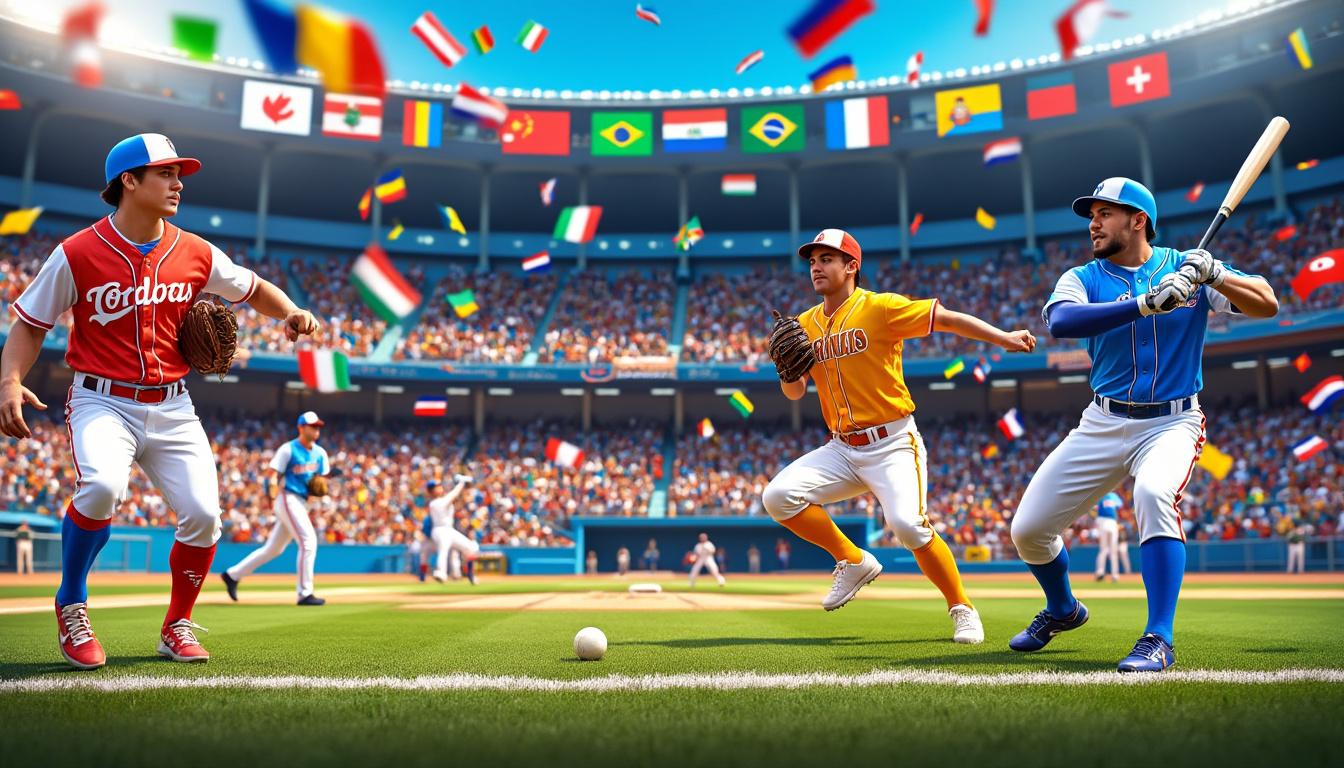
Baseball, the quintessential American pastime, is no longer confined within the boundaries of the United States. What started as a beloved national sport in the 19th century has spread its roots worldwide, creating a vibrant global community bonded by the crack of the bat and the roar of the crowd. As baseball courts spring up from the bustling streets of the Dominican Republic to the neon-lit stadiums of Japan, a thrilling new chapter unfolds — nations once considered peripheral baseball countries are now mounting a serious challenge to long-standing U.S. dominance. This international rivalry has intensified, transforming the sport into an electrifying global contest that captivates fans and redefines competition at the highest level.
The journey from a domestic pastime to an international spectacle was neither swift nor accidental. Countries across Latin America and Asia embraced baseball, nurturing local leagues and culturing unique styles of play that have enriched the global game. The World Baseball Classic (WBC), established in 2006, became a watershed moment, granting international teams a grand stage to channel national pride and showcase emerging talent. This tournament unveiled a new reality: the United States no longer holds unquestioned supremacy, as powerhouse teams like Japan’s Samurai Japan and the fierce squads from Cuba, South Korea, and the Dominican Republic demonstrate their capabilities with every pitch and play.
Moreover, global brands such as Rawlings, Wilson, and Louisville Slugger have expanded their reach, equipping players worldwide with professional gear that exemplifies top-tier performance and innovation. Paired with apparel giants like New Era, Under Armour, Adidas, and Nike, the baseball culture is as much a statement of style as of skill. This fusion of sportsmanship and international flair only amplifies the sport’s growing appeal across continents.
The Evolution of Baseball’s Global Footprint: From American Roots to Worldwide Passion
Baseball’s story is deeply intertwined with American culture, but its evolution into a global sport reflects years of cross-cultural exchange and expanding fandom. The sport’s early expansion to countries such as Cuba, Venezuela, and the Dominican Republic in the late 1800s laid the groundwork for baseball’s deep-seated presence in Latin America. Over decades, these nations not only adopted baseball but tailored it, creating playing techniques and league systems emblematic of their identities.
In fact, the Caribbean has emerged as one of the richest hotbeds of baseball talent. More than 20% of Major League Baseball players in 2025 hail from Latin American countries, proving the immense impact of their developmental systems and passionate fan bases. Players like Fernando Valenzuela from Mexico and Vladimir Guerrero from the Dominican Republic have become legends, breaking barriers and symbolizing a proud heritage.
Across the Pacific, Japan’s embrace of baseball reflects a blend of western influence and native sporting values. Samurai Japan, the country’s renowned team symbolizing discipline and unity, is renowned worldwide for its technical precision and commitment to excellence. The Nippon Professional Baseball League serves a massive fan base and is highly competitive, rivaling even MLB in many respects.
South Korea and Taiwan also play critical roles in Asia’s baseball boom, with substantial investment in youth development, professional leagues, and international competition. China, meanwhile, is rapidly growing its baseball infrastructure, aiming to cultivate a new generation of players who may soon grace MLB rosters themselves.
Here’s a snapshot of baseball’s traction internationally:
| Region | Notable Leagues | Star Players | Cultural Highlights |
|---|---|---|---|
| Latin America | Caribbean Series, Venezuelan Professional Baseball League | Fernando Valenzuela, Vladimir Guerrero | Baseball as national pride and social unity |
| Japan | Nippon Professional Baseball | Ichiro Suzuki, Shohei Ohtani | Koshien High School Baseball Tournament |
| South Korea | Korean Baseball Organization (KBO) | Hyun-Jin Ryu, Jung-Ho Kang | Emphasis on teamwork and technique |
| USA | MLB | Mike Trout, Mookie Betts | Baseball as entertainment and industry giant |
As baseball continues to embed itself in global cultures, the growing fan base and player pipeline demonstrate that this sport is much more than a pastime — it is a dynamic cultural phenomenon connecting continents through shared passion.
World Baseball Classic: The Ultimate Showcase for International Baseball Supremacy
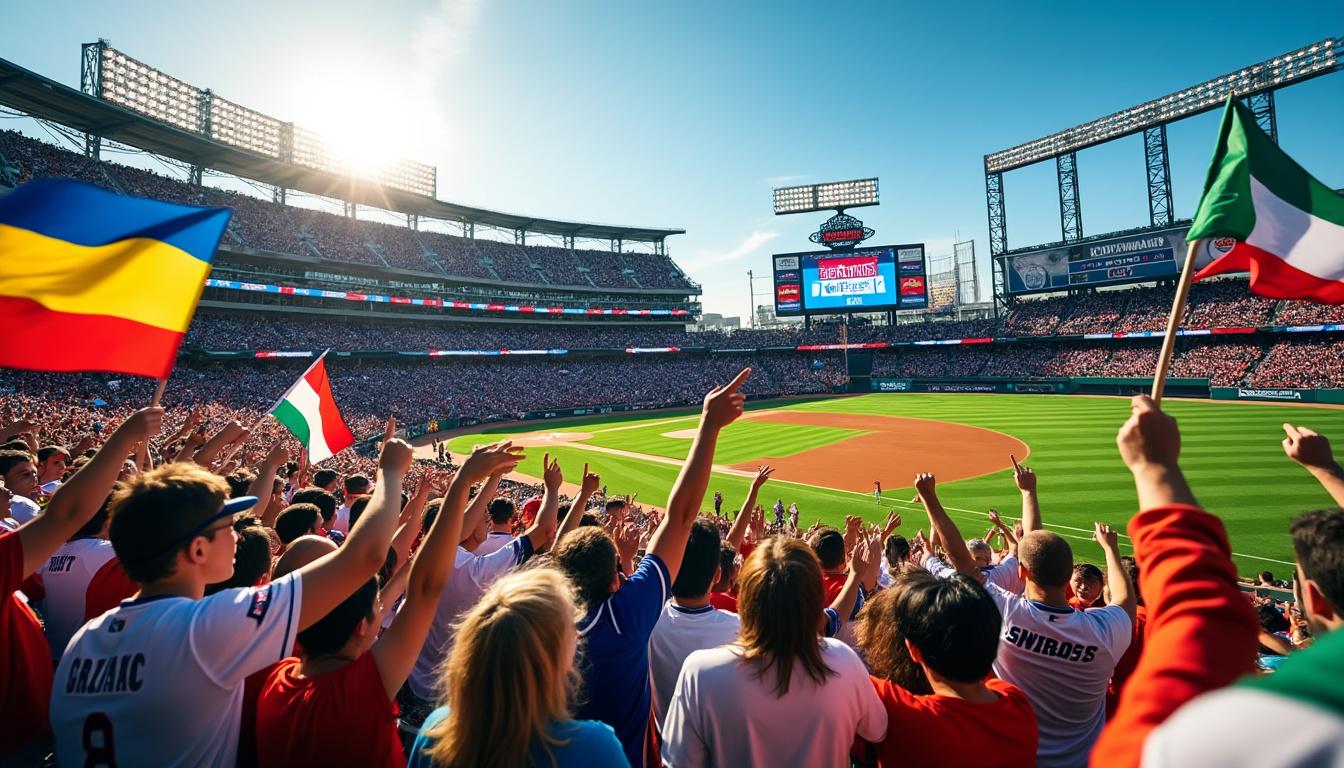
The World Baseball Classic (WBC) stands as the most significant event defining modern baseball’s global identity. Launched in 2006, it was carefully crafted to unite the world’s best players in national colors while competing in high-stakes rounds, raising the sport’s international profile.
Unlike other international sporting events, the WBC intentionally includes Major League Baseball professionals who typically compete for U.S. teams, turning global competition into a riveting battle of strategy, skill, and pride. The tournament’s unique format—a mix of round-robin and knockout stages—makes for electrifying games that pull audiences worldwide, shining a spotlight on emerging countries and veteran baseball powerhouses alike.
The Championships have witnessed jaw-dropping moments and unexpected triumphs. Japan’s back-to-back titles in 2006 and 2009, fueled by the legendary pitching of Daisuke Matsuzaka, showcased the tactical mastery and disciplined play epitomized by Samurai Japan. South Korea’s dramatic runs, Puerto Rico’s spirited appearance in the 2017 finals, and the Dominican Republic’s undefeated championship in 2013, led by Robinson Canó, all exemplify the tournament’s intensity and unpredictability.
Beyond the on-field drama, the WBC fosters economic and cultural growth for hosting nations. Cities like San Juan, Puerto Rico, have experienced surges in tourism and commerce during the events, demonstrating how baseball’s global audience translates into tangible benefits.
Technological advances—made possible by industry leaders like Wilson and Rawlings—have enhanced fan experiences with superior equipment and immersive digital broadcasts, making the WBC more accessible than ever. Data analytics and real-time stats provide deeper insights into game strategy and player performance, while streaming platforms extend the tournament’s reach to remote corners of the world.
Below is an overview of the WBC’s expansion and participating countries over the years:
| Tournament Year | Number of Teams | Host Countries |
|---|---|---|
| 2006 | 16 | USA, Japan, Puerto Rico |
| 2009 | 16 | USA, Japan, Puerto Rico, Mexico, Canada |
| 2013 | 16 | USA, Japan, Puerto Rico, Taiwan, Dominican Republic |
| 2017 | 16 | USA, Japan, Mexico, Korea, Dominican Republic |
The tournament continues to experiment with new formats and expanded participation to broaden baseball’s social and cultural impact. This global event is a powerful symbol of baseball’s changing landscape, where the balance of power is more contested than ever.
Emerging Baseball Titans: How International Teams Are Challenging U.S. Dominance
The once-clear supremacy of American baseball is now a fiercely contested domain. Through relentless development programs and spirited competition, international teams have increasingly matched, and often exceeded, the prowess of traditional U.S. giants. For a comprehensive view, visit how international teams are challenging us baseball dominance around the world.
Latin America’s influence remains profound, with countries like the Dominican Republic and Venezuela supplying some of the most dynamic athletes in MLB history. Their developmental academies, supported by brands such as Mizuno and Easton, produce players adept both at power hitting and deft fielding. Meanwhile, Cuba’s baseball heritage is steeped in rugged discipline and relentless competition, making them a perennial threat on the world stage.
Asia, with teams like Samurai Japan, continues to solidify its reputation. Japan’s methodical training regimens, combined with an emphasis on fundamentals, make their national team a formidable opponent globally. The KBO in South Korea and Taiwan’s professional leagues also hone talent that increasingly attracts attention from MLB scouts, eager to tap into these refined skill sets.
Several emerging powers illustrate baseball’s shifting balance:
- Netherlands: Leveraging strong team cohesion and an aggressive play style, they’ve earned respect in international tournaments.
- Israel: A rising baseball nation that emphasizes strategic pitching and defense.
- Italy and Australia: Nations expanding their baseball footprint with younger leagues and investment in youth programs.
This trend is reshaping not only the competitive environment but also the cultural and commercial dimensions of baseball. Equipment manufacturers like Adidas and Nike are capitalizing on the broader market, sponsoring international stars and domestic leagues alike, fueling a global baseball economy.
The increasing diversity enhances advertisement, outreach, and fan engagement, creating new opportunities for cross-cultural events and multinational tournaments beyond the well-known WBC. For fans, this means richer, more diverse baseball experiences and deeper personal connections to teams around the world.
Technological Innovations Driving Baseball’s Global Expansion
Baseball’s rise internationally owes much to technological innovations that break down barriers between fans and the game. Advances in broadcasting, analytics, and sporting equipment have propagated baseball’s growth far beyond traditional strongholds.
Global broadcasts, facilitated by networks and digital platforms, deliver live games in multiple languages, making it easy for fans from Tokyo to Caracas to stay connected to their favorite leagues and players. The enhanced reach makes baseball a daily spectacle, fostering fandom and motivating youth participation
Data analytics, embraced enthusiastically across leagues, has revolutionized how teams operate. Performance metrics provided by companies like Rawlings and Wilson inform coaching strategies, player conditioning, and in-game decisions. These tools are not just confined to MLB; they empower even smaller professional leagues worldwide, raising the level of play everywhere.
Innovative gear has also revolutionized player safety and effectiveness. The quality and craftsmanship offered by Mizuno’s gloves, Easton’s bats, and Louisville Slugger’s iconic models set global benchmarks. Apparel companies such as Under Armour, New Era, Adidas, and Nike contribute to this transformation by designing cutting-edge uniforms and cleats tailored to enhance player performance and comfort.
- Live streaming platforms bring the excitement of international competitions directly into fans’ homes, boosting viewership exponentially.
- Advanced statistical software provides coaches with in-depth insights fostering tactical innovation.
- Equipment technology ensures enhanced durability and precision, adapting to diverse playing conditions globally.
Such technological synergy has not only enhanced game quality but also magnified baseball’s cultural integration, making it an accessible and enthralling global sport.
The Cultural Core of Baseball: Unity, Identity, and Pride Across Borders
At its heart, baseball is about more than just competition; it’s a vessel of cultural identity and national pride. For countless communities, baseball weaves connections across generations and continents, embodying shared values and historical narratives.
In Japan, the revered Koshien high school baseball tournament evokes passions that eclipse even professional leagues, symbolizing perseverance and teamwork central to the Japanese cultural ethos. Similarly, Latin American countries see baseball as a unifying force that transcends social and economic divisions, inspiring hope and serving as a pathway to opportunity.
This cultural symbolism extends to the international stage with the World Baseball Classic. Athletes don national uniforms not just to compete but to represent centuries-old traditions and aspirations. The fandom erupts into displays of vibrant national colors, chants, and celebrations that bring together diverse populations in a unique sporting communion.
Consider the following cultural impacts of baseball globally:
- Community Identity: Baseball leagues serve as cultural landmarks fostering youth engagement and social cohesion.
- Historical Legacy: Stories of groundbreaking players inspire new generations and sustain cultural memory.
- International Collaboration: Tournaments foster cross-country dialogue and understanding through shared passion.
- Economic Opportunity: Baseball-related industries provide livelihoods, stimulate tourism, and encourage local investment.
The involvement of globally recognized brands like Nike and New Era illustrates the sport’s unique blend of heritage and modernity. Their sponsorship ties the past to the future, with players becoming ambassadors of both their culture and the sport’s global identity. Baseball’s role as a cultural ambassador enhances mutual respect and broadens the sport’s humanitarian resonance.
What is the World Baseball Classic and how does it promote global baseball?
The World Baseball Classic is the premier international baseball tournament bringing together elite players worldwide. Founded by MLB and the International Baseball Federation, it promotes baseball’s globalization, national pride, and cross-cultural competition.
How have international players influenced Major League Baseball?
International players have brought diverse playing styles, skills, and fanbases to MLB. Stars like Ichiro Suzuki, Shohei Ohtani, and Vladimir Guerrero have elevated the game’s quality and global appeal, bridging cultures.
What role do technological advancements play in global baseball development?
Technological advancements enhance global baseball by improving broadcasting access, player analytics, equipment quality, and fan engagement, thus raising competitive standards and expanding the sport’s reach worldwide.
How do cultural values affect baseball’s popularity in different countries?
Cultural values shape how baseball is played, celebrated, and integrated into society. For example, Japan emphasizes discipline and teamwork, while Latin American countries celebrate baseball as a source of national pride and community identity.
Why is baseball growing rapidly outside the USA despite challenges?
Baseball is expanding internationally due to effective development programs, global tournaments like the WBC, technological support, and strong cultural connections, overcoming competition from other sports and logistical hurdles.